
Climate Risk & Resilience
Building resilience in a changing climate
Climate change is no longer a distant risk. It is a present and accelerating reality. Its impacts are unfolding across every continent, disrupting economies, stressing infrastructure, and reshaping the way communities live and plan for the future.
Rising temperatures, shifting weather patterns, and more frequent extreme events are influencing how societies build, invest, and govern. These pressures are lived experiences that demand immediate attention.
Decisions made today will determine the resilience of tomorrow’s cities, ecosystems, and economies. As climate-related risks grow more complex, the world faces a pivotal moment to adapt, prepare, and rethink long‑term choices.
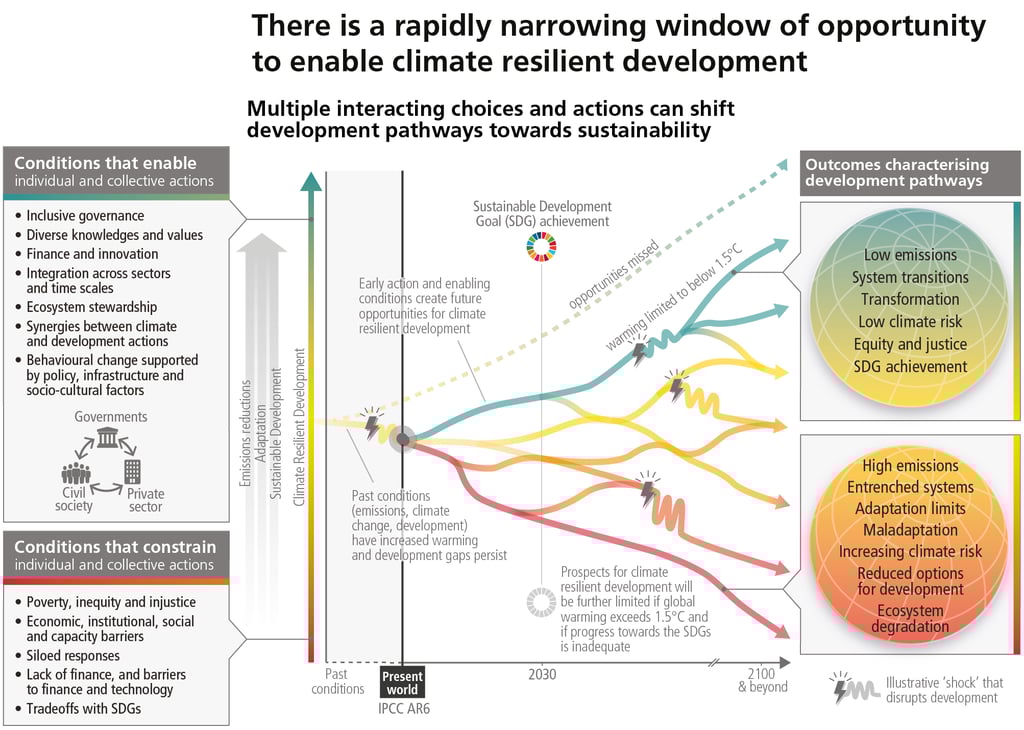
Climate risks generally fall into two categories:
Physical risks arise from changes in the climate system itself:
Extreme weather events — more frequent floods, storms, droughts, and heatwaves that damage infrastructure and disrupt supply chains
Chronic shifts — rising sea levels, changing rainfall patterns, glacial retreat, and creeping land degradation that erode the productivity of land, water, and ecosystems over time
Cascading impacts — climate stresses that trigger secondary effects: food insecurity, population displacement, fiscal strain on governments, and instability in financial markets
Transition risks emerge as the world moves toward a lower-carbon economy:
Policy changes such as carbon pricing or fossil fuel phase-outs
Shifts in technology, market demand, and investor expectations
Reputational exposure for projects or portfolios misaligned with climate goals
Key climate risks and the need to build resilience
A critical focus for the Belt & Road Initiative
Countries along the Belt and Road Initiative (BRI) face some of the world's highest levels of climate vulnerability. From coastal Bangladesh to the arid interior of Central Asia, BRI regions span diverse but often fragile geographies where the need for urgent climate action is the most pressing.
Infrastructure built today across BRI economic corridors, from ports, roads, railways, to utility networks, will shape development for decades. When climate risks are overlooked at the outset, assets can fail prematurely, service delivery becomes unreliable, and maintenance costs escalate far beyond expectations. The economic impact can be felt not only in damaged infrastructure but in disrupted trade, stalled mobility, and communities left vulnerable when essential services falter.
Building resilience in BRI contexts means embedding climate thinking into broader planning, environmental governance, and financial decision-making to build long-lasting resilience.
How can we help?
Risk & vulnerability assessments
Integrating climate and sustainability risk analysis into core decision-making


Scenario analysis & stress testing
Future-proofing assets and operations via TCFD/ISSB-aligned analysis
Quantifying the economic implications of climate actions and sustainability transitions
Economic impact modelling


We translate climate science into financial and operational language, conducting data-driven analysis of climate risk and identifying the need to build resilience.
Connect with us
Get in touch to collaborate on building the new Silk Road for sustainability transitions